Institutional visit to the Consulate General of Japan in Rio de Janeiro highlights dialogue about Wagyu in Brazil, its genetic origin, and traceability.

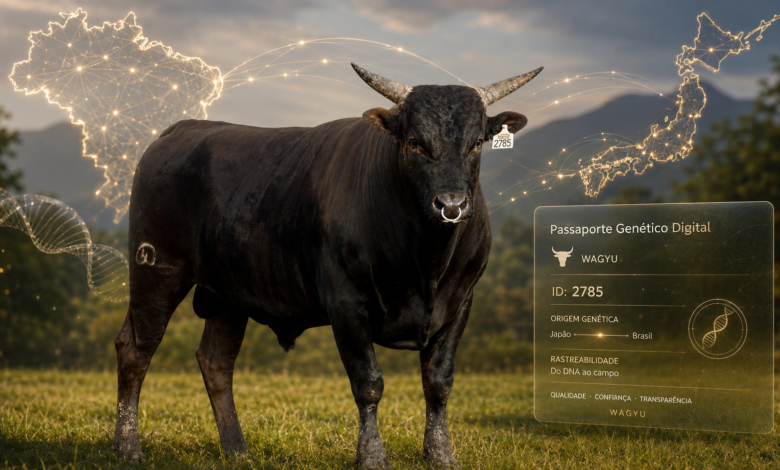
The story of Wagyu carries something that goes beyond the meat. It speaks of origin, tradition, patience, genetics, production culture, and respect for a lineage that has become a global symbol of quality.
It was with this spirit that Vilton Lima carried out an institutional visit to Consulate General of Japan in Rio de Janeiro, where he presented initiatives related to the responsible valorization of Wagyu genetics in Brazil, traceability, and the use of technical documentation to strengthen trust in the production chain.
The visit was institutional in nature and was conducted with respect for the cultural, historical, productive, and economic relevance of Wagyu to Japan. During the visit, Vilton presented information about the breed's presence in Brazil, the development of specialized breeding farms, and the importance of tools capable of organizing data on the origin, laboratory records, and genetic history of the animals.
Wagyu: a Japanese origin that demands respect.
The term Wagyu is associated with Japanese breeds of beef cattle. Among the main varieties are... Black Japanese woman, known internationally as Kuroge Wagyu; a Japanese Chestnut, also called Akage Wagyu; a Japanese Shorthorn, or Nihon Tankaku Wagyu; and the rare Japanese Polled, known as Mukaku Wagyu.
The best known is Kuroge Wagyu, recognized for its intense marbling, a characteristic that has made this meat a world reference in quality, tenderness, and gastronomic experience. Akage Wagyu It has a leaner profile, with a more pronounced meat flavor and a soft texture. Nihon Tankaku Wagyu It is valued for its umami flavor, associated with the presence of glutamic acid. As for... Mukaku Wagyu It is extremely rare and valued for its genetic quality.
In Japan, Wagyu is not treated merely as an agricultural product. It represents tradition, productive identity, accumulated knowledge, and a genetic asset of great value. Therefore, any initiative related to the breed requires care, technical precision, and respect for its origin.
Wagyu in Brazil: niche, added value, and responsibility.
Although Brazil is one of the world's leading livestock producers, Wagyu breeding still represents a highly specialized niche. It is estimated that the country has approximately... 15,000 to 20,000 cattle with Wagyu genetics, among purebred and crossbred animals, distributed among a select group of breeders, primarily in the states of São Paulo, Minas Gerais, and the Southern region.
This market does not compete on a large scale with traditional commercial livestock farming. Its differentiating factor lies in the added value, genetics, management, production time, feeding, and the ability to deliver differentiated meat to high-end restaurants, butcher shops, and consumers seeking premium cuts.
Given this positioning, traceability becomes an essential element. In a high-value chain, it is not enough to state the origin. It is necessary to demonstrate, document, and certify it.
When the name Wagyu is used without clear criteria, it opens the door to confusion, informality, and misuse of a name linked to a highly relevant Japanese tradition. Therefore, the promotion of Wagyu in Brazil needs to go hand in hand with technical responsibility, documentary transparency, and respect for the breed's history.
Traceability as protection of origin.
When discussing Wagyu outside of Japan, it's necessary to recognize the sensitive economic, cultural, and genetic aspects involved. The breed is associated with a highly valued Japanese tradition, built over generations, and its designation must be treated responsibly.
In this context, traceability should not be seen merely as a commercial tool. It also functions as a protective instrument against the misuse of the word Wagyu, false attribution of origin, informal documentation, and so-called genetic piracy.
The digital genetic passport presented by Vilton Lima It follows precisely this logic: organizing information, gathering technical documents, recording laboratory data, and strengthening transparency regarding the genetic origin of animals.
By clearly documenting lineage, records, and available technical data, initiatives of this kind help to distinguish serious breeders from opportunistic practices. They also contribute to preserving respect for the Japanese origin of Wagyu, avoiding confusion between genetics, production territory, breed registration, and commercial identity.
Therefore, promoting Wagyu cattle in Brazil needs to go hand in hand with responsibility, technical precision, and respect for the breed's history. The greater the value of a genetic asset, the greater the care that must be taken with its documentation, traceability, and public communication.
Digital genetic passport: identity, trust, and transparency.
During the visit, Vilton presented the logic of digital genetic passport from the AG Genetics Token as an instrument for the organization, documentation, and responsible promotion of Wagyu genetics in Brazil.
The proposal stems from a simple yet powerful idea: every animal with relevant genetics should have its history documented in an organized, secure, and verifiable manner. This could include laboratory information, origin records, genealogical data, genetic history, and elements that help prove the animal's identity.
In a market where the word "Wagyu" has strong commercial appeal, traceability is not just a technical requirement. It becomes a way to protect serious breeders, value legitimate genetics, and offer greater security to consumers, buyers, and partners in the production chain.
The digital genetic passport does not replace official records, breed associations, or laboratory controls. Its function is to gather, organize, and make visible relevant information, creating an additional layer of trust and transparency.
This approach is especially important in premium markets, where origin, genetics, management, and documentation are inseparable parts of the final product value.
Genetic origin, language, and institutional care.
One of the most important points when discussing Wagyu outside of Japan is the care taken with language.
Wagyu cattle raised in Brazil must be presented accurately, respecting their genetic origin and avoiding any confusion between production territory, lineage, registration, and breed identity. This care is fundamental to preserving the integrity of the market and to recognizing the historical importance of Japan in the formation, protection, and appreciation of Wagyu cattle.
In this context, it's not just about promoting a high-value breed. It's about building a culture of documentation, transparency, and accountability around a sensitive genetic asset.
Public communication about Wagyu must acknowledge this sensitivity. The more valued a genetic heritage is, the greater the care required for its identification, protection, and market presentation.
Science, tradition and future of premium livestock farming.
Wagyu occupies a unique position in the world of livestock farming. It belongs to the past, due to the strength of its tradition; to the present, due to its gastronomic and genetic value; and to the future, due to its connection with science, traceability, sustainability, and innovation.
For Brazil, this agenda represents an important opportunity, but also a responsibility. The country possesses productive strength, agricultural knowledge, and the capacity for innovation. By incorporating traceability tools and genetic certification, it can expand its presence in higher value-added chains without losing sight of respect for the Japanese origin of the breed.
The premium livestock industry of the future will be increasingly demanding. It won't be enough to produce; it will be necessary to prove it. It won't be enough to sell; it will be necessary to demonstrate origin, quality, safety, and responsibility.
An agenda of respect, documentation, and appreciation.
The institutional visit of Vilton Lima The donation to the Consulate General of Japan in Rio de Janeiro represents a gesture of respect for the Japanese origin of Wagyu and the importance of treating this breed with technical seriousness and institutional responsibility.
For the project From Salt to Soil, This movement reinforces a broader vision: the livestock farming of the future will not be built solely on productivity. It will require identity, origin, environmental responsibility, reliable documentation, and dialogue between science, market, and culture.
In this sense, Wagyu is more than just a noble breed. It's an example of how genetics, tradition, and innovation can come together when there's care for origin, respect for history, and a commitment to transparency.
And, as Brazil seeks to strengthen its position in higher value-added supply chains, initiatives for traceability, documentation, and genetic enhancement become part of a new agenda for Brazilian livestock farming.
An agenda that does not deny the Japanese origin of Wagyu. On the contrary: it recognizes, respects, and helps protect this origin against misuse, commercial confusion, and opportunistic practices.



 Portuguese
 English
 Arabic
 French
 Spanish