Why Salt Purity Changes Herd Behavior
The quality of the crystal defines the energy flow that guides metabolism and behavior.

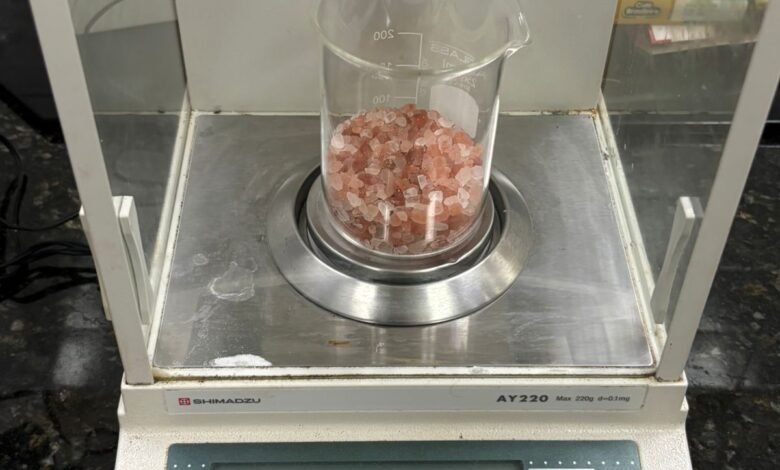
When discussing mineral supplementation, most discussions revolve around consumption, price per bag, and apparent herd performance. But there's a point that often goes unnoticed: the purity of salt.
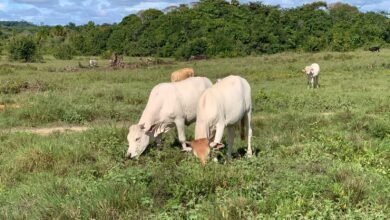
In the field, we repeatedly observe that cattle behavior changes when the salt is truly clean, natural, and from a consistent source. The difference begins in the feed trough, extends through metabolism, and reaches the soil—creating a much greater impact than the producer imagines.
1. Purity is not a detail — it's a mechanism.
Two salts can have the same name on the label, but function completely differently in the animal's body.
Purity regulates three fundamental factors:
- absorption
- energy stability
- metabolic response
When the salt is pure, the animal's organism It doesn't waste energy. Trying to compensate for impurities, clumps, or industrial residues. The body simply does what it needs to do.
Result: more stable behavior and more predictable consumption.
2. Irregular consumption is not "cattle morning" — it's a sign.
It's common to hear:
“"The cattle ate very little today. It must be because the weather changed."”
“"That particular batch is eating too much; it's typical of the group."”
In practice, many of these variations are not related to either climate or natural behavior.
They arise because the organism oscillates When dealing with low-purity salts:
- days of rejection
- days of excessive consumption
- excessive licking
- individual variation within the same batch
When purity improves, consumption approaches a... constant pattern, which is ideal for efficiency.
3. The energy effect is invisible, but decisive.
Salt plays a direct role in electrolyte balance and, consequently, in... metabolizable energy.
When salt delivers on its promise:
- The animal rests less and grazes more.
- rumination time improves
- there is less temperature variation
- Unnecessary energy expenditure decreases
All of this is subtle, but accumulated in the complete cycle it becomes real result.
4. Purity also reaches the soil.
The quality of the salt affects how the animal returns nutrients to the pasture.
In extensive management, this means:
- more uniform stools
- better nutrient cycling
- more complete absorption
- lower metabolic burden
A purer salt It's not just about nutrition.It is also soil management.
5. The final question is not "how much does it cost?", but "what does it give back?"“
When the purity of salt changes:
- the herd responds
- metabolism stabilizes
- the soil reacts
- the result appears
It's one of those spots where The decision is simple, but the impact is profound..
Our field observation is clear.
Where the salt is pure, behavior changes.
And when behavior changes, everything around it changes too.
This article is part of a series of articles that complement the book. From Salt to Soil — to help producers, technicians, and researchers understand the link between minerals, energy, and balance in the production system.
 Portuguese
 English
 Arabic
 French
 Spanish