Where the Invisible Value of Regenerative Livestock Farming is Born
Regeneration begins with small decisions that accumulate coherence over time.

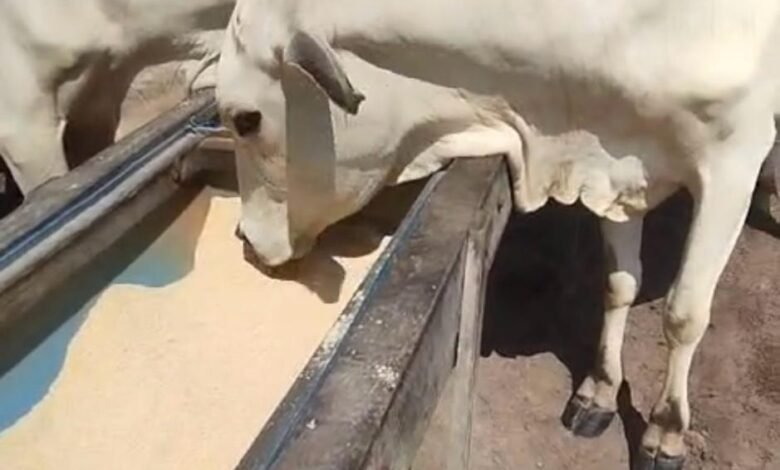
Most of the value generated in livestock farming doesn't appear in the short term or in the numbers we traditionally monitor.
There is an invisible value—silent, accumulated, and profoundly decisive—that arises at the point where the system ceases merely to produce and begins to... regenerate.
This value is not due to a heavier herd, a specific response from the pasture, or a better harvest.
It is born from something much more subtle and at the same time powerful: the energy cycle functioning coherently.
Regenerative livestock farming is not just a technique.
It's a way of organizing the system so that it creates more energy than it consumes.
1. Regeneration is about creating value before creating productivity.
Productivity is a consequence.
Regeneration is the cause.
When the system is aligned — living soil, stable metabolism, coherent management — it produces value in ways that are not immediately visible:
- the soil stores more carbon
- subterranean biology is getting stronger.
- the roots go deeper
- the landscape retains more water
- heat stress decreases
- the cycles become longer
This value is not entered as a line item in the spreadsheet.
But it is he who determines whether the farm will prosper for decades.
2. The invisible value arises from the energy that the system ceases to lose.
Regeneration isn't just about adding life —
é Stop wasting energy..
Hidden losses are the real villains of livestock farming:
- consumption fluctuations
- erratic behavior
- temperature variations
- irregular ruminal efficiency
- soil with low microbial activity
- weak infiltration
- slow decomposition
Each of these losses is a constant drain of energy.
And wasted energy means increased cost, even when performance seems normal.
When the system stops losing energy, it begins to... accumulate value.
3. Living soil reduces costs without needing to "show off" it.“
A living soil:
- More water seeps in.
- responds faster
- It is more resilient.
- needs fewer corrections
- delivers more nutritious plants
- returns constant energy to the herd.
None of these benefits appear in isolation on a graph.
But they all improve overall efficiency.
The invisible value lies in this silent economy that accumulates over time.
4. Coherent metabolism generates long cycles.
The coherent flock:
- ruminates better
- graze more
- rests less
- stabilizes consumption
- returns more functional organic matter
- It nourishes the soil more efficiently.
This pattern creates something rare in livestock farming: stable cycles.
And stable cycles are valuable because they reduce risk — and reduced risk is added value to the system.
5. Regeneration is more about flow than technique.
The common mistake is to imagine regeneration as a "tool list":
- rotational grazing
- crop-livestock integration
- permanent coverage
- diversification
- holistic management
All of this helps — but it's not the core value.
Value arises from energy flow, not the isolated technique.
If the flow is coherent, any technique will work.
If the flow is broken, no technique will fix it.
6. The invisible value appears in the long term — but the producer feels it in the short term.
You feel the invisible value when:
- the cattle become calmer
- The pasture is more resistant to drought.
- The soil responds faster to management.
- the property is less dependent on external inputs
- Performance varies less from month to month.
It's not a value that you measure.
It's a value that you perceive.
He transforms the farm from the inside out.
7. Regeneration is transforming energy into assets.
Ultimately, regeneration is wealth.
It's land that's worth more.
It's a risk that's worth less.
It's a system that produces more with less effort.
It's operational longevity.
It's productive safety.
It's metabolic stability.
It's environmental resilience.
And all of this arises — silently — from the decisions made at the feed trough, in the choice of salt, in pasture management, in reading animal behavior, in interpreting animal cycles.
The invisible value is what sustains the visible value.
And those who learn to see this value change the way they produce forever.
 Portuguese
 English
 Arabic
 French
 Spanish