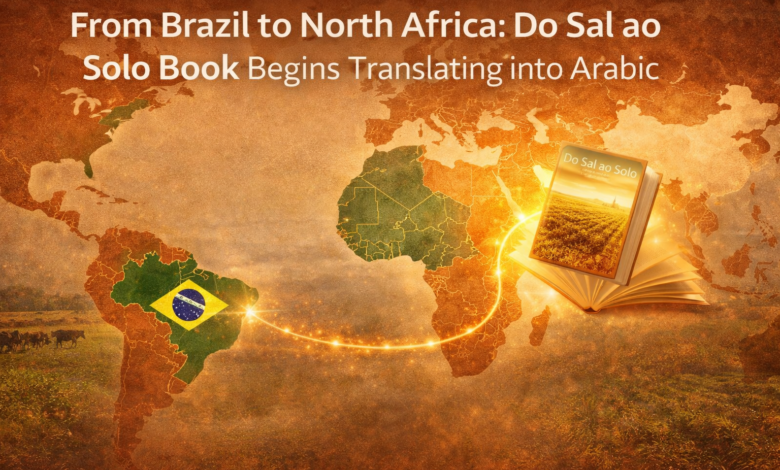
Projects originating in the Brazilian countryside rarely imagine that they will be able to engage with producers and researchers from other regions of the world. However, initiatives that combine science, animal nutrition, and a systemic view of agricultural production have the potential to transcend borders.
It is in this context that the book From Salt to Soil begins to take a new step in its international trajectory. The work, written by Vilton File e Clesio Landini, The book discusses the role of mineral nutrition in animal health, livestock productivity, and soil regeneration. Now, the book is beginning its translation process into Arabic, expanding its reach to new regions of the world.
The translation is supported by Saadia Lakehal, an international leader linked to innovation initiatives in AgTech and Industry 4.0, currently working on coordinating projects and collaborative networks focused on the technological transformation of the agribusiness sector.
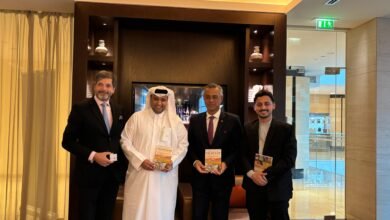
The connection with the project arose from conversations with Vilton File, Vilton, a Brazilian producer in the AgTech sector and one of the protagonists of the field experiments that inspired the book. In recent meetings, Vilton had the opportunity to present the project proposal and discuss possible connections with international initiatives focused on innovation in agribusiness.
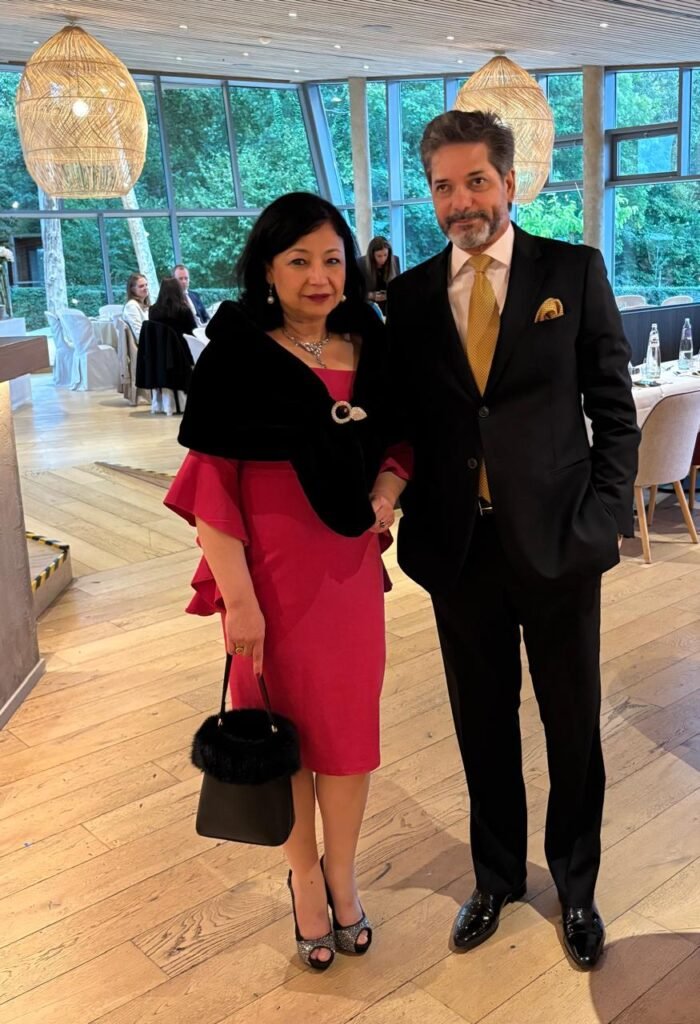
Saadia Lakehal e Vilton Lima during a recent meeting in an international setting of
Innovation and collaboration.
Recently recognized among the “100 Global Future Builders 2026”, Saadia Lakehal participates in international initiatives that connect innovation, sustainability, and economic development. Her work has contributed to bringing together different innovation ecosystems, especially between Europe, North Africa, and other emerging regions in the field of technology applied to agriculture.
Approaching the project From Salt to Soil This opens an important opportunity for dialogue between distinct productive realities. Countries in North Africa and the Middle East face challenges similar to those discussed in the book, especially on topics such as:
- mineral nutrition of the herd
- productivity in environments with natural constraints
- sustainable soil management
- efficiency of livestock systems
The translation into Arabic therefore represents more than a linguistic adaptation. It is about creating a bridge of knowledge between productive experiences from different regions of the world.
The book From Salt to Soil It originated from practical observation of the role that mineral nutrition plays in livestock production systems. The work seeks to integrate technical knowledge, field experiences, and reflections on the future of agricultural production in a global scenario that is increasingly demanding in terms of efficiency and sustainability.
By launching its publication in new languages, the project begins to engage with a broader community of producers, researchers, and professionals interested in solutions that connect productivity, animal health, and soil regeneration.
This movement also reflects a growing trend in contemporary agribusiness: the formation of international collaborative networks, in which local experiences can generate relevant learning for different regions of the planet.
The translation into Arabic thus marks another step in building a global dialogue on sustainable production practices and on the role of technical knowledge in the evolution of agricultural systems.
With new international connections emerging, the project From Salt to Soil It continues to expand its reach and reinforce the idea that the future of agricultural production increasingly depends on the integration of science, innovation, and cooperation between different parts of the world.

 Portuguese
 English
 Arabic
 French
 Spanish