The Soil as an Extension of Herd Metabolism
What the animal returns to the ground determines the life, strength, and response of the system.

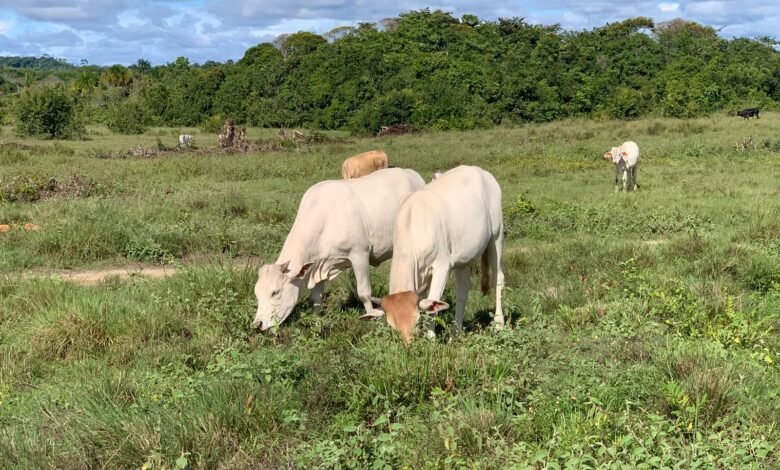
There is a silent truth in the field that is almost never explicitly stated: The soil is an extension of the herd's metabolism..
What happens inside an animal largely determines what happens underground.
And this connection is so profound that when the metabolism is coherent, the soil responds immediately — and when it is inconsistent, the soil shows it.
Ultimately, animal and soil are not separate entities. They are two sides of the same energy cycle.
1. What the herd returns to the soil is as important as what it consumes.
For a long time, livestock farming results were evaluated solely based on the animal's performance.
Today we know that this is only half the equation.
The other half is what the animal gives back:
- organic matter
- minerals
- nitrogen compounds
- volatile fatty acids
- microorganisms
The quality of this return depends directly on quality of metabolism.
If the metabolism is balanced, the soil receives complete and functional inputs.
If the soil is unstable, it receives "compensation residues".
And that changes the entire chemistry of the system.
2. Feces and urine are metabolic indicators — and management tools.
The modern producer needs to understand that the soil doesn't receive "waste": it receives metabolic information.
For example:
- Very dry feces → low fermentation efficiency
- Very liquid stools → energy loss
- Strong odor → microbial instability
- whole grains → failure in energy availability
- Very dark coloration → ruminal stress
Each of these signals not only tells us about the animal—it tells us about what the soil is receiving as "biological food.".
A weak metabolism results in weak soil.
A strong metabolism results in thriving soil.
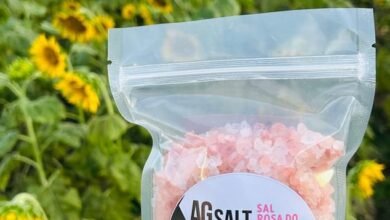
3. The purity of minerals influences soil life.
When the mineral is pure and consistent, the metabolism needs to make fewer adjustments to balance the body.
This means less loss, better absorption, and more functional reabsorption.
The soil immediately notices:
- faster decomposition
- increased microbial activity
- better aggregation
- reduction of acidic odors
- greater uniformity between pickets
The soil microbiota is incredibly sensitive to what the animal returns.
She reacts quickly — for better or for worse.
4. Soil is subterranean metabolism
The soil functions like a large organism:
- absorbs
- converts
- breathe
- regenera
- returns energy to the system
The organic matter from the herd feeds this underground organism, which in turn feeds the plants, which in turn feed the herd again.
It's a cycle, not a line.
And in this cycle there is no "waste": there is flow.
When the flow is coherent, the result appears:
- greater water infiltration capacity
- more active roots
- more resilient plants
- longer cycles
- natural reduction of pests and diseases
Soil metabolism improves when herd metabolism improves.
5. Why does this change the way livestock farming is done?
Because it puts the flock as regenerating agent, not just a consumer.
The flock:
- nutrient cycle
- redistributes organic matter
- activates soil biology
- promotes aeration
- incorporates microbial diversity
- stimulates root growth
But this only happens fully when the animal is in metabolic balance.
Otherwise, it becomes merely a "vehicle" for losses.
6. The future of regenerative livestock farming involves viewing the soil as part of the herd's body.
This is the central vision:
The soil is affected by decisions that begin in the feeding trough and end in the subterranean biology.
If the input is good, the metabolism flows.
If metabolism flows, the soil responds.
If the soil responds, the pasture grows.
If the pasture grows, the herd will start flowing again.
It's an entire cycle bound together by energetic coherence.
Livestock farming that views the soil merely as a support system loses half of its potential.
Livestock farming that views the soil as an extension of its metabolism builds living, solid, and sustainable systems.
 Portuguese
 English
 Arabic
 French
 Spanish