The Invisible Energy of the Field
How Small Decisions Change the Entire Production System

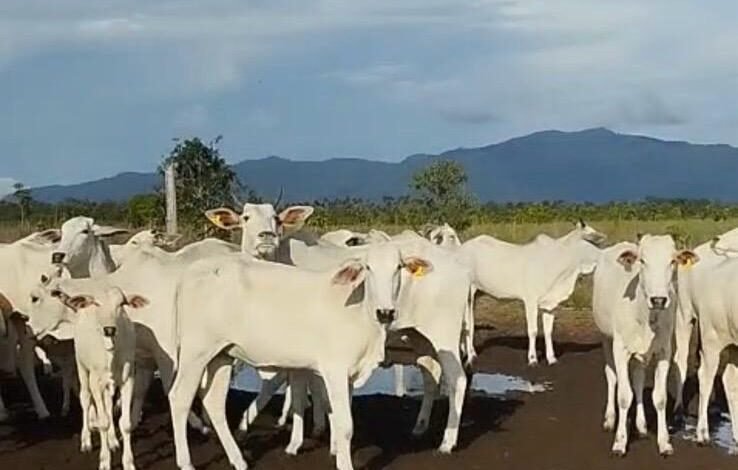
In the countryside, almost everything that really matters doesn't become apparent immediately.
Herd performance, soil life, and system efficiency are long-term results of decisions that seem small—but drive the entire energy machinery of the farm.
There is an invisible layer that unites these decisions: the energy that circulates between soil, plant and animal.
She's not on the spreadsheet, but she determines the entire spreadsheet.
1. The energy that precedes performance
Many producers evaluate the result solely based on weight gain.
But before weight there is metabolism, before metabolism there is mineral balance, and before mineral balance there is... quality of the decision.
This logical chain is simple:
- When the foundation is coherent, the result flows;
- When the foundation is weak, the system compensates—and in compensating, it loses energy.
The animal works more to resolve an imbalance than to produce performance.
And that's when a farm starts to waste too much energy without realizing it.
2. Hidden losses cost more than visible mistakes.
Most inefficiencies lie not in major errors, but in small deviations.
- salt of inconsistent quality
- variability in consumption
- animals without a metabolic pattern
- soil with low organic response
- incomplete nutrient cycling
Each of these points seems small individually, but together they form a vortex of silent losses.
They drain energy from the system every day.
And wasted energy is wasted money — even before it becomes a number on paper.
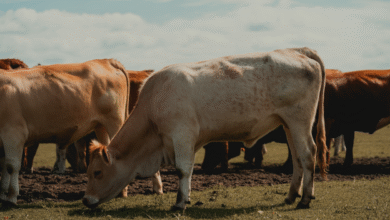
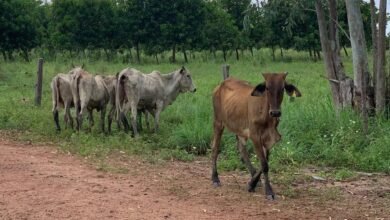
3. The behavior of the herd reveals the truth.
When there is balance:
- the cattle graze steadily
- the rest period is shorter
- rumination is more efficient
- The displacement is predictable.
- Feed consumption at the trough is stable.
When this is not the case, warning signs appear:
- Get close—don't go deeper into the trough.
- individual variation within the same batch
- shifted grazing schedules
- long periods of idleness
- excessive licking
The animal's behavior is the first indicator of the system's energy.
While the spreadsheet shows the past,
the flock shows the present.
4. The soil gives back what it receives.
The soil functions like a biological battery:
It stores, converts, and returns energy to the system.
When the herd's metabolism is balanced, the soil receives more complete, richer, and more functional matter.
This generates:
- faster decomposition
- greater microbial activity
- better physical structure
- more efficient natural cycling
When metabolism is unbalanced, the soil receives "compensatory residues," which are metabolically poor and biologically weak.
The battery is dying.
5. The future of agriculture is systemic, not fragmented.
The field is entering a phase where productivity and regeneration are not competing for space: they complement each other.
This change requires a more in-depth analysis:
- Each input has an energy impact.
- each decision alters the cycle
- each point of equilibrium creates value.
- Each imbalance generates a cost.
The farm ceases to be a collection of parts and becomes a whole. living organism, where body, ground, and energy flow are one and the same.
6. The role of the modern producer
The producer who understands energy understands the future.
And who understands the future:
- spend less
- produces more consistently
- It regenerates areas more efficiently.
- It depends less on external corrections.
- First, see where the system is failing.
The new value of the field lies in seeing what is not apparent at first glance.
 Portuguese
 English
 Arabic
 French
 Spanish