The Farm as a Single Organism (Animal + Soil + Flow)
When all parties communicate, energy flows and the system stays alive.

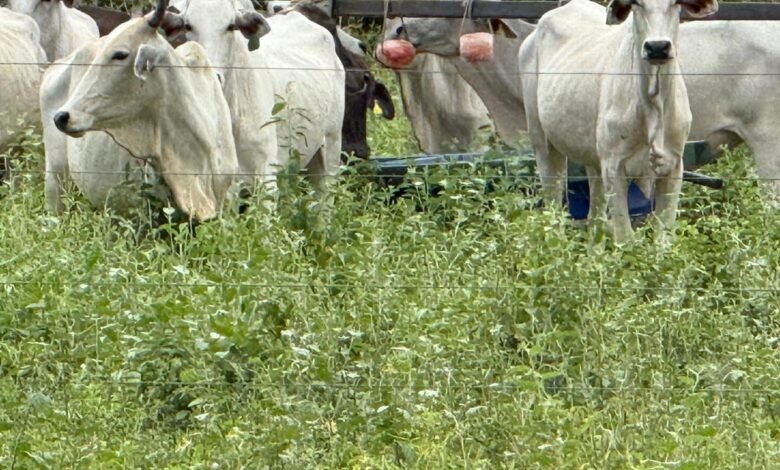
For a long time, we viewed the farm as a collection of parts:
Livestock on one side, pasture on the other, soil as support, management as a tool, and inputs as a solution.
But this fragmented view does not represent reality.
A farm is not a mosaic of independent elements.
She is a living organism, where animals, soil, plants, climate, water, and management form a single connective system driven by energy flow.
When we understand this unity, livestock farming changes level — and goes from being an operation to an ecosystem.
1. The animal is not the end — it is the intermediate link.
In the old model, the focus was on the animal: weight, conversion, consumption.
But the animal is only one link in the cycle.
It receives energy (from the plant).,
transforms energy (in metabolism)
and returns energy (to the ground).
The animal is a energy bridge between the surface and the subsoil.
If this bridge is coherent, the whole system flows.
If it is unstable, the whole system compensates.
2. The soil is not a support — it is subterranean metabolism.
The soil is the biological equivalent of the farm's "digestive system".
It converts, filters, transforms, and distributes energy.
And it does this by means of:
- microorganisms
- roots
- fungi
- organic matter
- minerals
- physical structure
When the soil is alive, it creates self-sustaining cycles.
When he is tired, he becomes dependent on external corrections.
The soil doesn't react slowly because it's lazy —
he reacts slowly when lack of functional energy.
3. Pasture is the lung of the system.
The plant is the organ that captures energy from the environment (light, CO₂, water).
It acts as the lung: it absorbs, transforms, breathes, and delivers energy to the animal.
When pasture operates in:
- correct density
- functional height
- Adequate rest
It constantly returns energy to the system.
When it operates out of balance:
- loses vigor
- responds less
- It uses more energy to recover.
The farm thrives on pastureland.
4. Water is the blood of the body.
Water:
- transports nutrients
- regulates temperature
- maintains metabolic flow
- supports microorganisms
- stabilizes the thermal environment
- It feeds the roots.
Inconsistent water creates metabolic noise, which spreads throughout the entire system.
Constant water creates physiological coherence, which stabilizes the body.
5. Management is the nervous system.
The management process sends "signals" to the organism:
- entry and exit times at the picket lines
- grazing pressure
- shading
- water distribution
- supplementation
- rest breaks
The way these signals reach the herd determines whether the organism reacts with:
- fluidity
or - stress
Consistent management preserves the flow.
Inconsistent management creates noise.
6. The flow of energy is what unites everything.
When we think of the farm as an organism, the central element is neither the animal, nor the soil, nor the plant.
And the energy flow that passes through all of them.
- enters through the light
- passes through the plant
- is converted by the flock
- returns to the ground
- returns as pasture
- returns to the flock
- stabilizes the system
The flow needs to be constant and consistent.
If it breaks down at any point — even in the “details” — the entire organism feels it.
7. When the farm ceases to be an organism, it becomes a tired operation.
Signs of a broken organism:
- soils that do not respond
- unstable herds
- stressed pastures
- short cycles
- growing need for inputs
- loss of predictability
- variation in behavior
- loss of constancy
Signs of a living organism:
- long cycles
- low energy expenditure
- stable herd
- solo giving back life
- vigorous pastures
- fewer interventions
- more natural response
- more consistency
A living organism produces more with less.
8. The producer who understands the organism makes smarter decisions.
Because he understands:
- cause before consequence
- energy before number
- flow prior to input
- Metabolism before performance
This perspective not only improves the outcome —
She changes the way she works.
The producer stops fighting against the system and starts to... to drive the organism.
And when the body functions properly, everything else functions.
 Portuguese
 English
 Arabic
 French
 Spanish