Genetic Traceability: Why Is This New Global Standard Redefining the Value of Biological Assets?

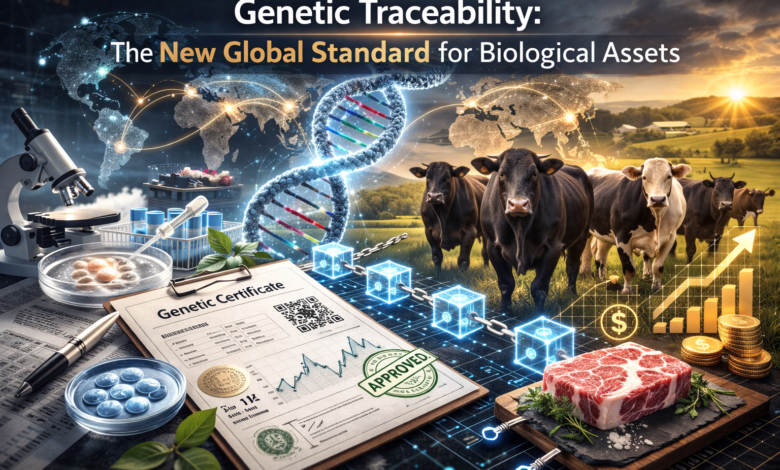
The global bioeconomy is undergoing a structural change. It is no longer enough to produce biological assets with operational efficiency. The market demands unequivocal proof of origin, authenticity, and genetic integrity.
In this new scenario, genetic traceability ceases to be a technological innovation and becomes a strategic governance tool. The impact is not only technical. It affects valuation, access to international markets, regulatory compliance, and risk mitigation.
Companies that understand this transition are transforming biological assets into auditable, financeable, and globally marketable assets.
What is genetic traceability in practice?
Genetic traceability is the ability to identify and monitor a biological asset through its DNA, creating a verifiable scientific record of origin and lineage.
In corporate practice, this means:
Objective confirmation of origin
Reducing the risk of adulteration
Contractual security in international transactions
Technical basis for audits and certifications
DNA functions as a permanent identifier. Integrated into digital systems and data platforms, it strengthens the governance of the production chain.
This is not just about laboratory control. It's about strategic infrastructure applied to the business.
Why the global standard is changing
Three factors explain the consolidation of genetic traceability as a new international standard.
Increasing regulatory pressure. Importing markets are raising sanitary, environmental, and origin verification requirements. Non-tariff barriers have become sophisticated control instruments.
ESG Agenda. Institutional investors demand transparency and traceability to reduce exposure to reputational and operational risks. Biological assets without structured validation are now subject to a trust discount.
Complexity of global supply chains. The greater the internationalization, the greater the vulnerability to fraud, improper substitutions, and contractual disputes. Genetic certification reduces uncertainties and strengthens legal security.
The result is clear: genetic traceability is migrating from a competitive advantage to a market requirement.
Direct impact on the valuation of biological assets.
Genetically certified biological assets are beginning to exhibit measurable governance attributes.
Greater credibility with financial institutions.
Reducing litigation involving genetic property.
Better positioning in international negotiations.
Expanded access to premium markets
When an asset is scientifically auditable, it becomes more predictable from a financial standpoint. This alters risk perception and directly influences its pricing.
Companies that structure robust traceability programs tend to capture a sustainable competitive advantage.
Strategic advantage for companies
The adoption of genetic traceability strengthens the corporate compliance architecture. It anticipates regulatory requirements and creates barriers to entry for less structured competitors.
Furthermore, integration with technologies such as blockchain and artificial intelligence expands monitoring capabilities and generates auditable digital traces.
Organizations that position themselves within this movement demonstrate maturity in governance and a long-term vision. In a growing bioeconomy environment, this translates into a structural advantage.
As international regulatory harmonization progresses, the trend is toward the consolidation of this model as a global benchmark. Companies that lead this implementation will be better positioned to compete in highly demanding markets.





 Portuguese
 English
 Arabic
 French
 Spanish