Watch the video at the end of the article.
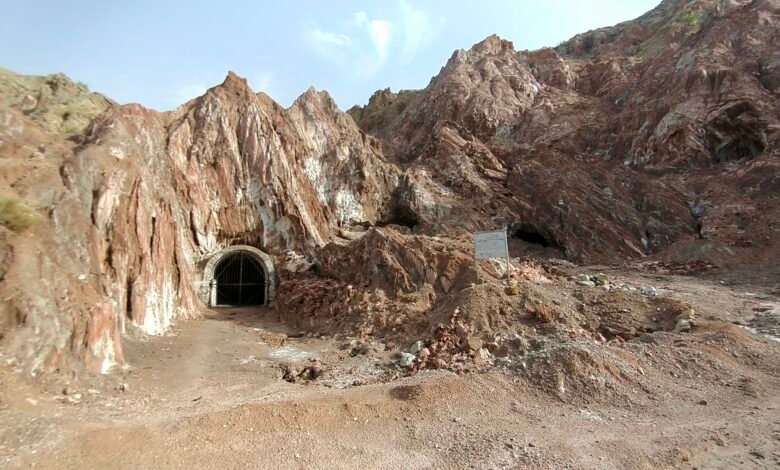
Long before appearing in Brazilian feed troughs and transforming livestock behavior, pink salt begins its story in a harsh, silent, and profoundly mineral environment. It's a process that doesn't involve complex machines or sophisticated industrial lines—it begins in the rock, with human touch and the careful extraction of a crystal that took millions of years to form.
This initial stage is important because it helps to understand why pink salt behaves so differently in animal metabolism.
The answer lies precisely in its origin.
1. The crystal is formed deep underground, not on the surface.
The pink salt extracted from the Himalayan belt is not a "superficial" salt.
It has not come into contact with modern seas, has not passed through recent rivers, and has not absorbed urban contaminants. It is a salt formed and preserved deep underground — protected by geological layers that have maintained its purity, density, and mineral consistency.
This deep origin explains why its electrochemical signal reaches the animal's organism so cleanly.
2. The extraction process respects the natural structure of the crystal.
Unlike industrial salts, pink salt is not naturally ground.
It is withdrawn in dense blocks, which need to be cut with precision.
This initial carving is not aimed at aesthetics — it is aimed at do not damage the crystal.
The less unnecessary impact, the greater the preservation:
- of the mineral structure
- of electrochemical density
- of signal coherence
It is this integrity that makes the metabolism respond consistently.
3. Before it is salt, it is geology and time.
Each fragment that breaks off from the rock carries with it:
- tectonic pressure
- millennial sedimentation
- chemical stability
- absence of contamination
- ancient mineralization
The herd consumes more than one mineral.
Consume one A crystal that carries with it the history of the earth..
And this matters — because the body recognizes purity.
4. Why does this make a difference in herd behavior?
When the salt arrives with:
- low humidity
- stable crystalline structure
- absence of metallic noises
- mineral coherence
The animal does not waste energy correcting imbalances.
He uses energy for the system, no against him.
In practice, we see:
- more consistent intake
- more predictable rumination
- less behavioral variation
- greater lot stability
- more fluid metabolism
It all begins at the origin — with the type of crystal that comes out of the rock.
5. The video reveals exactly that "zero moment".“
The video accompanying this article shows pink salt. in its purest state, still in its raw form, being carved by hand. Each blow reveals the crystal's density and the integrity of its geological formation.
It's a simple but powerful record:
It shows the raw material before any transformation.
👉 Watch the video below and see how pink salt grows before it reaches the field.

 Portuguese
 English
 Arabic
 French
 Spanish