Consistency as an Indicator of System Health
When the pattern holds, the system reveals its true energetic coherence.

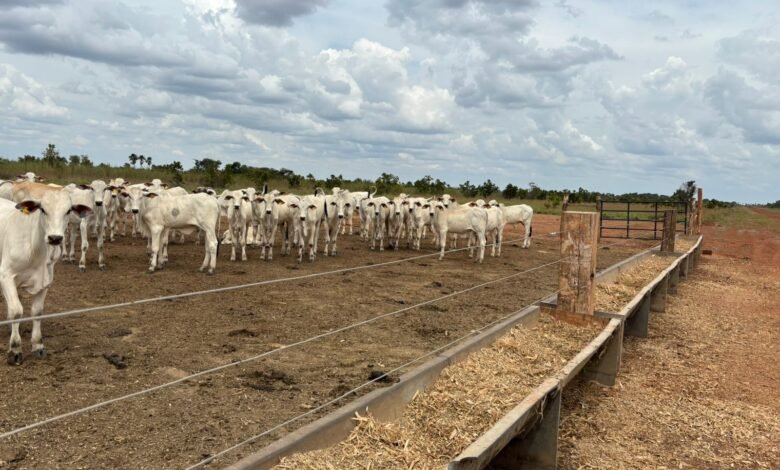
In the field, there is a more sensitive and precise indicator than any number on a spreadsheet: constancy.
Consistency in consumption, grazing, rumination, movement, soil response, and herd behavior.
She is quiet, discreet, and at the same time, profoundly revealing.
When the system is balanced, everything repeats itself with precision.
When it is out of balance, consistency is the first thing to disappear.
1. Consistency is not routine — it's coherence.
Routine is something that management imposes.
Consistency is something that the body expresses.
A cohesive flock has:
- predictable grazing times
- uniform consumption among individuals
- stable rumination patterns
- balanced displacement
- calm and functional behavior
None of this is by chance. This is systemic health.
The animal only allows itself to be consistent when the body doesn't need to compensate for anything.
2. Fluctuations are symptoms — never causes.
When the system loses coherence, micro-oscillations arise:
- Consumption that rises and falls without explanation.
- animals that spend long periods of time still
- Poor grazing day with no climatic cause.
- sudden change in batch behavior
- extreme variations between identical individuals
None of these fluctuations is the problem.
They are messages of the problem.
The animal's body doesn't "make mistakes".
He replies.
3. Metabolism reveals the truth before performance.
Performance is the final element in the chain.
Before him, there is:
- mineral balance
- electrochemical flow
- energy stability
- effective rumination
- consistent absorption
When metabolism fluctuates, behavior fluctuates.
And when behavior fluctuates, performance drops — always.
Consistency, therefore, is not just an indicator:
é early diagnosis.
4. The constancy of the flock depends on the purity of the base.
The system's foundation begins with salt — the type of crystal, its mineral purity, and the energy it provides to the metabolism.
When the basis is consistent:
- The body works less to adjust.
- there is less variation in consumption
- behavior stabilizes
- Unnecessary energy expenditure decreases
- rumination is regulated
- the soil receives more balanced matter
Consistency is always a consequence of coherence.
5. The soil's consistency is even more revealing.
The soil also has patterns.
When he is alive, the cycles repeat themselves with precision:
- quick response after rain
- uniform coloring
- good aggregation
- characteristic smell of microbial life
- constant decomposition of organic matter
When it loses consistency, the soil gives back clear signals:
It responds less, takes longer, becomes more opaque, and loses texture.
Consistent soil is functional soil.
Uneven soil is tired soil.
6. Consistency reduces costs and increases predictability.
A coherent system expends less energy trying to reorganize itself.
And the energy saved becomes:
- more performance
- more response from pastures
- less invisible loss
- less variability
- longer and more sustainable cycles
Consistency reduces risk.
Reduced risk increases results.
7. The farm doesn't need perfection — it needs consistency.
No one controls the weather.
No one controls all the variables.
But consistency doesn't come from control.
It is born from internal balance.
The producer who learns to observe consistency stops reacting to the problem and starts anticipating it.
It is management done with technical sensitivity and systemic understanding — exactly as presented in From Salt to Soil.
Constancy is the map of the system.
Whoever learns to read it, masters the path.

 Portuguese
 English
 Arabic
 French
 Spanish