Digital Genetic Passport
AGT's initiative to expand proof of origin in global livestock farming.

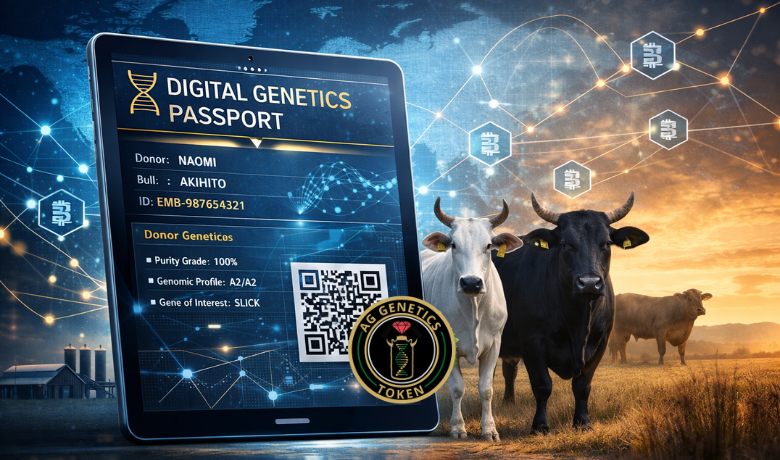
AGT's initiative to expand proof of origin in global livestock farming.
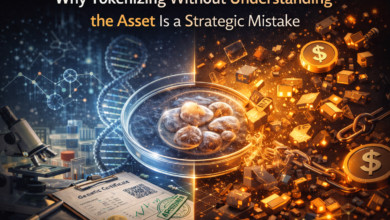
Developed by AGT, the Digital Genetic Passport proposes a new layer of trust for embryos and other high-value genetic assets, combining certification, digital organization of information, and blockchain registration.
High-value livestock farming has evolved in terms of productivity, genetic selection, and reproductive biotechnology. Embryos, semen, and other biological materials have come to occupy an increasingly strategic space in operations focused on high performance, the formation of superior herds, and international integration. In this scenario, one issue is gaining traction: the need for more robust mechanisms to verify the origin, documentary integrity, and traceability of genetic assets.
It was from this market analysis that the AGT structured the concept of Digital Genetic Passport, an initiative aimed at creating a new layer of trust for high-value genetic assets.
More than just a new document, this is a new way of organizing, presenting, and strengthening trust around embryos and other strategic biological materials.
Why is this topic starting to gain importance?
Today, the market already operates with laboratory certificates, genealogical records, and consolidated technical documentation. These elements remain fundamental and play an important role throughout the chain. However, as the economic value of assets increases and transactions become more sophisticated, so does the need to expand the capacity to validate this information.
In more demanding markets, especially when there is potential for international circulation, documentation alone may no longer be sufficient. The trend is towards demonstrating what is being declared with greater clarity, consistency, and verifiability.
This change is silent, but significant. In premium genetic assets, trust ceases to be merely relational and begins to have a direct impact on perceived value, commercial security, and market potential.
What is the Digital Genetic Passport?
O Digital Genetic Passport, The system proposed by AGT is a framework designed to gather essential information about biological assets in a digital environment. This includes genetic origin data, donor and sire information, laboratory links, documentary references, and elements that help support the authenticity and traceability of the material.
In practice, the concept integrates three complementary layers.
The first one is the technical certificate, based on formal information about the reproductive process.
The second one is the digital passport, which organizes this information in a more accessible, structured, and suitable way for circulation in commercial, institutional, and international environments.
The third one is the blockchain record, which functions as an additional layer of integrity, reinforcing proof of existence, the immutability of the record, and document traceability over time.
What problem does this initiative seek to solve?
The problem isn't necessarily the absence of documents. The problem lies in the limitations of the traditional model when the level of requirements increases.
As genetic assets become increasingly valuable, trust needs to be underpinned by more robust mechanisms. The market tends to demand structures that help reduce doubts about the authenticity, origin, documentary consistency, and history of the asset.
In this sense, the initiative of AGT It emerges as a response to enhance clarity and informational security surrounding these materials. It does not replace existing documentation. It strengthens its capacity for representation in an environment more driven by transparency, data, and validation.
Where does blockchain fit into this model?
Blockchain is not a replacement for certificates. It serves as a trusted infrastructure.
Instead of competing with technical documentation, blockchain registration acts as a complementary layer of proof. Its function is to associate the set of documents with a permanent, verifiable record that is resistant to unauthorized alterations. This helps to reinforce the integrity of the content and to create a more robust temporal reference to the existence of that record.
In other words, the certificate remains the formal basis. The digital passport enhances the intelligibility and presentation of the asset. And the blockchain strengthens the documentary integrity of the whole.
Why this could gain traction in global livestock farming
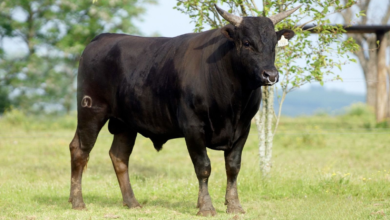
Premium bovine genetics is no longer perceived merely as a livestock input. In many cases, it acts as a strategic asset. It influences positioning, multiplication capacity, reputation building, and entry into higher value-added markets.
When an asset gains this level of importance, the documentation associated with it also changes. It ceases to be merely administrative support and becomes an integral part of the perception of quality, credibility, and value.
This trend is likely to intensify as the livestock industry becomes more professional, digitalized, and connected to international environments. In such contexts, trust cannot depend solely on the reputation of the agents involved. It needs to be supported by structures that allow for more objective validation.
A need that the market may not yet fully realize.
New standards don't always emerge to address fully conscious pain points. In many cases, they appear before the market can clearly name the emerging need.
O AGT Digital Genetic Passport It seems to fit precisely into this type of transition. It emerges at a time when high-end livestock farming already accumulates valuable assets, but still operates, in many cases, without a more robust layer of integration between certification, digital organization, and proof of integrity.
Therefore, consolidating a proposal like this tends to require not only supply, but also market education.
More than just a document, a new layer of trust.
O AGT Digital Genetic Passport It should not be understood merely as technological innovation. Its deeper meaning lies in the attempt to respond to a larger transformation: the change in how genetic assets are perceived, presented, and validated.
It is still too early to say which models will be most adopted or which standards will prevail in the coming years. But the discussion about genetic origin, chain of custody, document integrity, and digital validation is likely to gain traction as the sector evolves.
With this initiative, the AGT It seeks to contribute to building a new level of trust for high-value livestock farming.
In this new scenario, the ability to demonstrate—and not just declare—may become an increasingly relevant differentiator.
 Portuguese
 English
 Arabic
 French
 Spanish