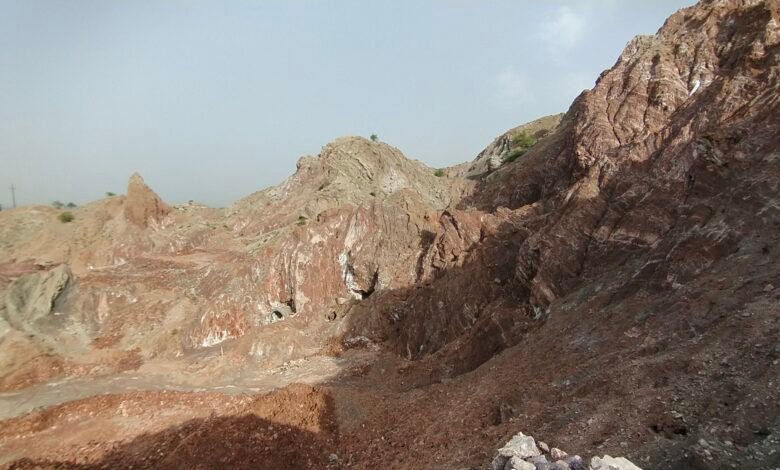
Long before it reaches the troughs in Brazil, pink salt originates in one of the oldest and most unique geological environments on the planet: the Himalayan Belt, a formation that brings together thousands of years of pressure, plate movement, deep mineralization, and natural stability.
It's not just a mountainous region —
It is a territory where the land reveals its most ancient past.
1. A region shaped over millions of years.
Pink salt is extracted from deposits formed hundreds of millions of years ago, when ancient marine basins evaporated and became trapped between layers of rock in regions that, much later, would become what we now call the Himalayas.
For millions of years, three phenomena shaped this salt:
- high pressure between tectonic plates
- depth which protects against contamination
- slow sedimentation, which creates dense and stable crystals.
This explains why pink salt exhibits high purity, low humidity and consistent mineralization — characteristics that make a direct difference in animal metabolism.
2. A territory naturally protected from contamination.
What differentiates the producing region is the combination of:
- natural isolation
- absence of urban interference
- stable geological formation
- deposits protected by deep layers
Unlike many surface salts, this salt is not fresh.
It did not pass through rivers, modern seas, or sources of pollution.
He remained sealed for millions of years.
Therefore, pink salt is considered one of the salts of the most natural origin. stable and consistent of the world — which directly impacts how the animal organism responds to it.
3. Artisanal extraction and purity control
Extraction in the region typically follows non-aggressive methods, often involving manual or semi-artisanal operations, precisely to preserve the crystal's structure.
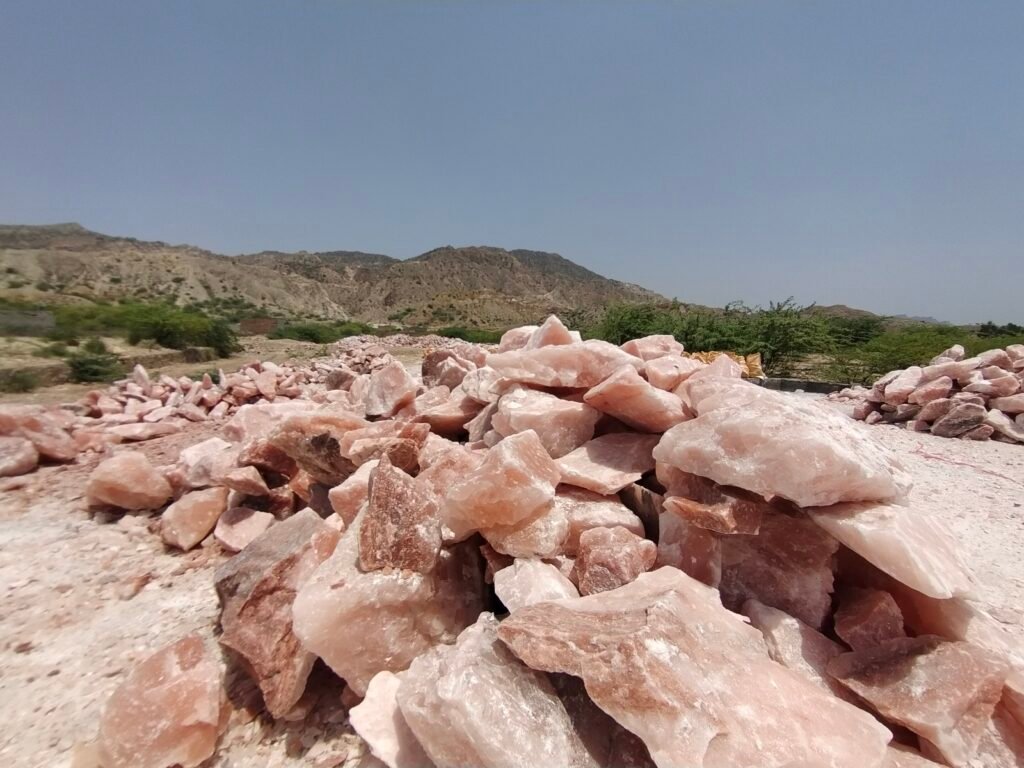
The logic is simple:
- less grinding
- less heat
- less processing
- more stability in the crystal
The less aggression, the more the crystal preserves its mineral coherence — something that, as shown in the book, directly influences the metabolic flow of the herd.
4. Why is this origin important for Brazil?
Because two salts with similar labels can have... completely different metabolic behaviors.
Pink salt originating from the Himalayan belt has:
- low humidity
- low contamination
- high electrochemical stability
- crystals with more homogeneous formation
- cleaner mineral signal
And this is evident in the field in:
- more consistent intake
- more stable rumination
- more consistent herd behavior
- less physiological “noise”
- more uniform response to grazing cycles
These effects caught the attention of technicians and researchers —
And that's exactly what led Vilton to test, compare, and observe in practice what no one else was looking at in depth.
5. A crystal that carries more than just minerals.
When we talk about the region that produces pink salt, we are not just describing geology.
We are describing origin, coherence and signal.
Each crystal carries the story of:
- tectonic pressures
- plate movements
- ancient sediments
- natural stability
- millions of years of isolation
This geological history transforms, in the animal organism, into:
- more fluid metabolism
- higher available energy
- more predictable behavior
- more coherent answers from the batch
The field feels the difference precisely because of the crystal. It carries with it an origin that cannot be replicated by common salts..

 Portuguese
 English
 Arabic
 French
 Spanish