Biological Assets in Brazil: Is There a Sufficient Regulatory Framework to Support the Sector's Growth?

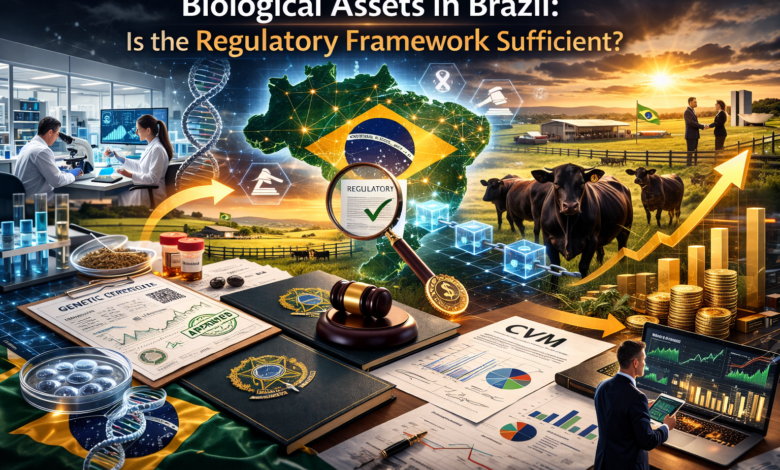
Biological Assets in Brazil.
Brazil occupies a strategic position in the global bioeconomy. The relevance of agribusiness, biotechnology, and forestry production places biological assets at the center of national value creation. However, as the international market raises the level of regulatory and governance requirements, a critical question arises for investors and operators: is the Brazilian regulatory framework sufficient to support expansion, legal certainty, and global competitiveness?
The answer requires technical analysis and strategic vision.
What are biological assets from a regulatory perspective?
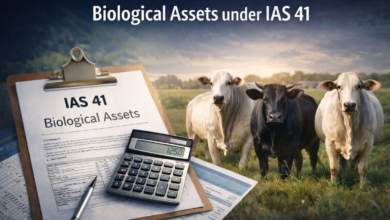
Biological assets comprise living organisms used for agricultural, livestock, forestry, or biotechnological production. In the accounting field, their measurement is governed by CPC 29, aligned with the international standard IAS 41.
However, the regulation of biological assets in Brazil is not limited to accounting aspects. It involves:
Environmental framework
Health legislation
Biosafety rules
Genetic property standards
Land and contractual regulation
The challenge lies not in the absence of rules, but in regulatory fragmentation.
Brazilian regulatory structure: robust or dispersed?
Brazil has a relevant regulatory framework. The Biosafety Law, environmental legislation, the National Seed and Seedling System, and the actions of regulatory bodies create a structured institutional network.
However, from a corporate and international perspective, three points deserve attention.
First, the dispersed nature of the regulations. Regulations are distributed among different bodies and legal instruments, requiring a high degree of legal coordination on the part of companies.
Secondly, there is the uncertainty of interpretation. Frequent changes in administrative understandings and judicial decisions impact predictability.
Third, there is international pressure for traceability and transparency, which is evolving at a faster pace than domestic regulatory consolidation.
The country has a relevant regulatory framework. The question is whether it is sufficiently integrated to support rapid growth and attract global capital.
The impact of regulatory governance on valuation.
For institutional investors, legal certainty is a key pricing factor.
Biological assets depend on regulatory stability for:
Guaranteeing exploration rights
Ensure environmental compliance.
Avoid legal contingencies
Facilitate access to credit and financing.
When the regulatory framework is clear and predictable, perceived risk decreases. When there is regulatory overlap or interpretative uncertainty, the cost of capital tends to increase.
In this context, the discussion about regulatory adequacy is not theoretical. It directly impacts valuation, fundraising, and international expansion.
International pressures and new demands
Importing markets are adopting stricter standards related to sustainability, traceability, and proof of origin.
European regulations on deforestation-free supply chains, expanded sanitary requirements, and more sophisticated ESG criteria raise the expected level of compliance.
Brazilian companies need to align their governance with these standards, even though domestic legislation is still in the process of harmonization.
Global competitiveness depends not only on the existence of standards, but also on the ability to integrate domestic regulations with international requirements.
What could evolve in the Brazilian regulatory environment?
Some issues are likely to gain prominence in the coming years.
Increased digitization of records and databases
Integration of environmental and health databases
Strengthening traceability mechanisms
Enhancing the protection of genetic resources
Consolidating these measures can reduce uncertainties and strengthen Brazil's position as a reliable supplier of biological assets on a global scale.
Companies that anticipate regulatory adjustments and structure advanced compliance will be better positioned in an increasingly demanding environment.

 Portuguese
 English
 Arabic
 French
 Spanish