The Field as a Living Organism
The Science of Energy Connecting Livestock, Soil, and the Future of Agriculture

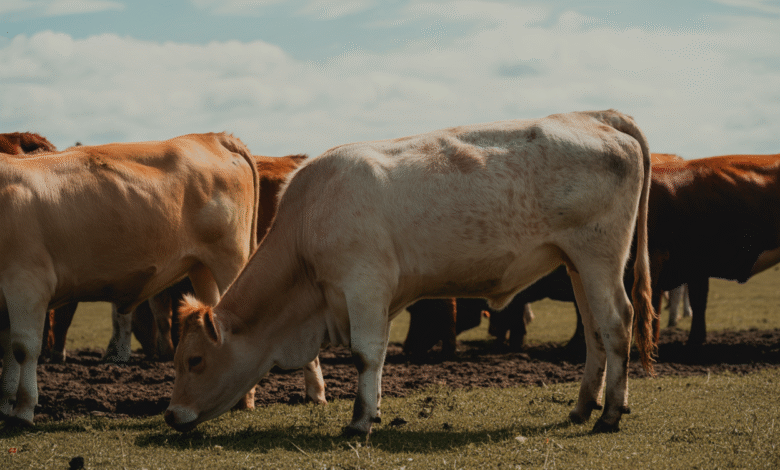
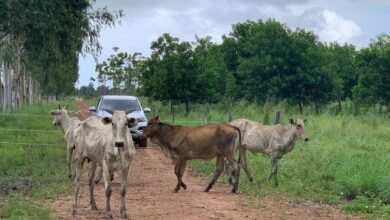
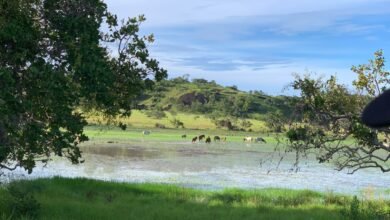
When we think about the daily life in the countryside, we often only see what's right in front of our eyes: the cattle, the pasture, the feeding trough. But there's another field—the invisible one—that sustains everything we see.
And it is there that true efficiency happens.
The energy that drives the farm isn't just the energy of the food. It's the energy of the cycle. It's the flow that begins with the salt, passes through the animal's metabolism, and returns to the soil in the form of life. Nothing in the field exists in isolation. Everything is interdependent. Everything is in flow.
Salt as the primary energy vector
Salt is not just a supplement.
It is the farm's primary energy decision.
Each crystal defines the type of flow that will circulate between the animal, its metabolism, and the soil. Mineral purity determines the system's coherence: when salt is balanced, the body expends less energy correcting imbalances, converts food more efficiently, and returns richer, less acidic matter to the soil. This reduces waste, increases efficiency, and initiates a regenerative productive cycle.
Metabolism as a bridge between matter and environment.
In the animal's body, salt regulates the electrochemical flow that keeps vital reactions functioning:
— transport of nutrients
osmotic balance
— enzyme activation
— converting energy into real performance
What seems like a microscopic detail defines the entire macroscopic logic of livestock farming. A balanced metabolism returns clean energy to the environment. The opposite returns waste.
From body to ground: where energy returns.
Livestock farming doesn't end with cattle.
She remains on the ground.
Everything the animal ingests—minerals, compounds, forage—returns to the ground in another form, feeding bacteria, fungi, and microorganisms that reorganize the underground metabolism. The soil behaves like a biochemical organism that breathes, oxidizes, stores, and releases energy. When the cycle is in balance, the soil becomes self-sustaining—less dependent on external corrections and more capable of regenerating life on its own.
Energy balance as a true indicator of sustainability.
For decades we have evaluated productivity solely by what comes off the farm.
But the future also demands measuring what it gives back.
Balanced soil produces net positive energy.
Unbalanced soil consumes energy from the system.
The difference is enormous — economically, environmentally, and productively.
Energy efficiency, therefore, is not an abstract concept. It's practical management. It's understanding that simple decisions—like the type of salt—define how the entire farm will function for months or years.
The new science of agriculture: coherence as a value.
Modern agriculture has already understood:
There is no productivity without consistency..
It was this vision that gave rise to From Salt to Soil.
Combining science, energy, and management is not just talk — it's a method.
The field is not a machine.
It's an organism.
Organisms thrive through balance, not force.
The new value of the field is born precisely there:
in the ability to transform microscopic decisions into macroscopic impact — on livestock, soil, landscape, and consumer confidence.
 Portuguese
 English
 Arabic
 French
 Spanish